AI Medical Scribes for Psychiatry in 2026:What Actually Works (and What Doesn’t)
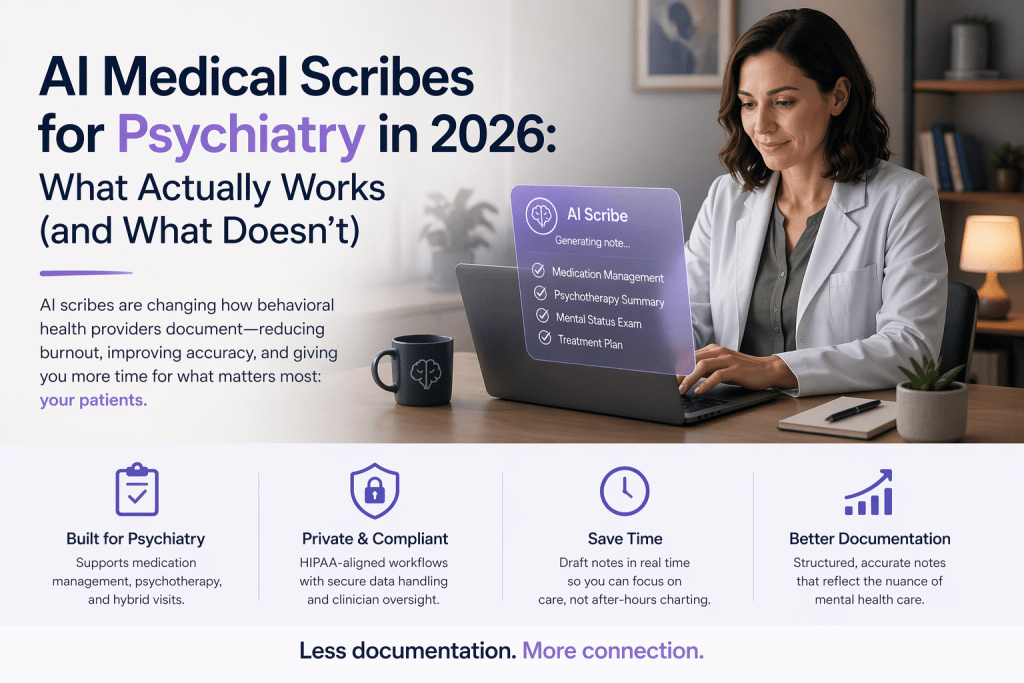
AI Medical Scribes for Psychiatry in 2026: What Actually Works (and What Doesn’t) AI Medical Scribes Are Growing in Psychiatry, But Not All Are Built for It AI medical scribes are increasingly being adopted across healthcare, including psychiatry, asclinicians look for ways to reduce documentation burden and improve efficiency. For psychiatrists, PMHNPs, and behavioral health […]
How to Document Decisional Capacity in SNF and Hospital Consultant Psychiatry
In skilled nursing homes and hospital consult liaison psychiatry, requests for a capacity assessment are common. Courts, attorneys, and families often request clinical documentation when pursuing guardianship or activating a medical power of attorney. For psychiatrists and psychiatric mental health nurse practitioners, assessing medical decision-making capacity is a routine part of clinical care. A formal […]
How More Efficient Documentation Can Support Growth in Mental Health Practices
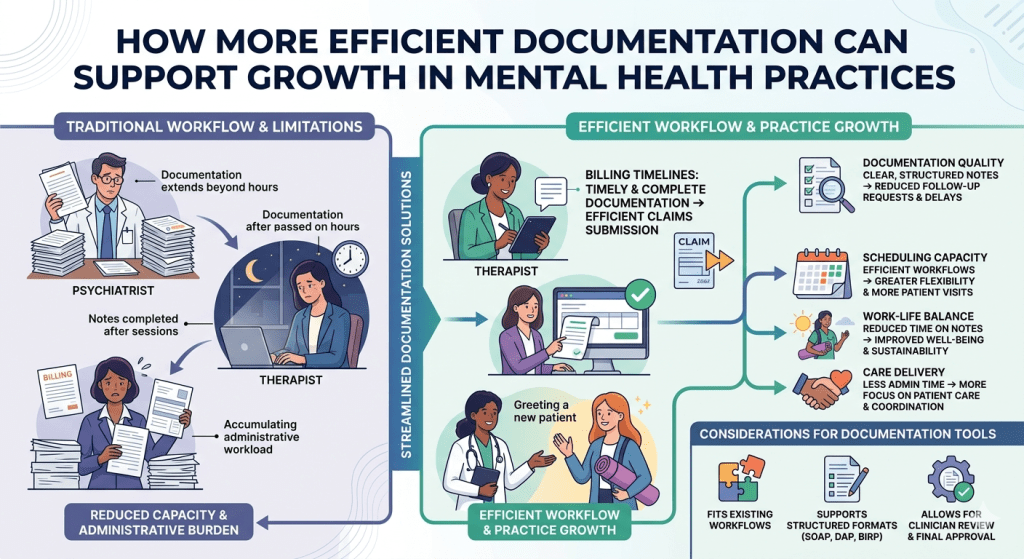
How More Efficient Documentation Can Support Growth in Mental Health Practices In many mental health practices, documentation is often viewed primarily as a compliance requirement. However, documentation workflows can also influence operational efficiency, billing timelines, and overall practice capacity. As administrative demands increase, many clinicians are exploring tools and processes that may help streamline documentation […]
How to Write Psychiatry Notes Faster (Without Sacrificing Compliance or Quality)
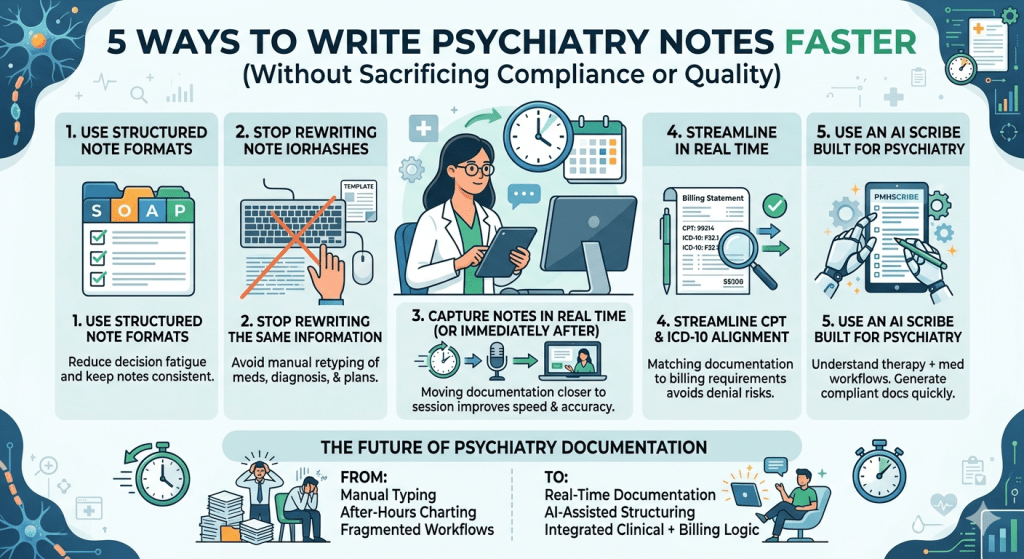
How to Write Psychiatry Notes Faster (Without Sacrificing Compliance or Quality) If you’re a psychiatrist, PMHNP, or therapist, you already know the reality: Documentation doesn’t stop when your last patient leaves. For many mental health providers, charting extends hours beyond clinical time, cutting into evenings, weekends, and personal time. And while speed matters, cutting corners […]
Ambient Scribe for Mental Health: What Clinicians Actually Need (And Why Most AI Tools Miss the Mark)
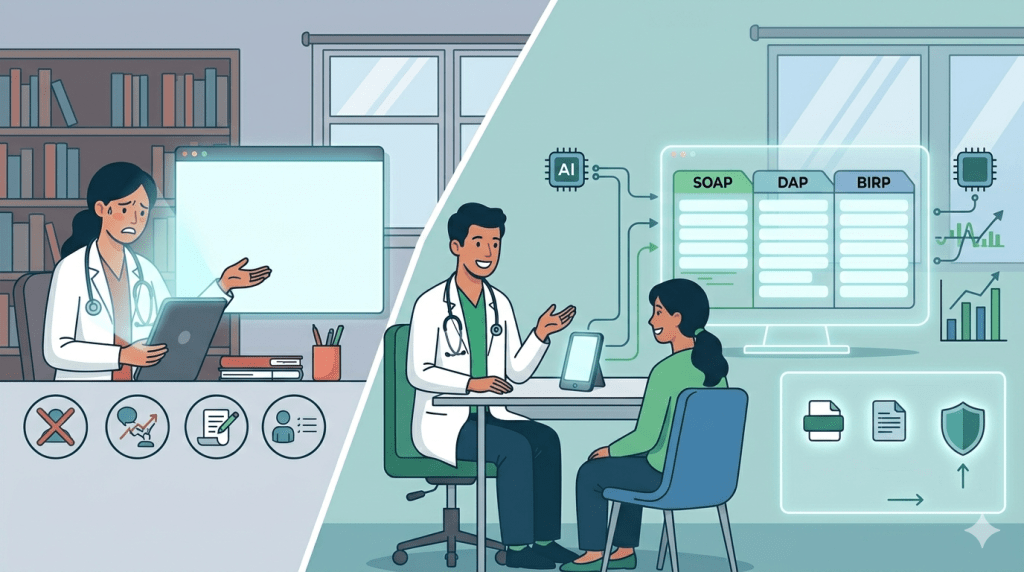
Ambient Scribe for Mental Health: What Clinicians Actually Need (And Why Most AI Tools Miss the Mark) The rise of the ambient medical scribe is not a trend, it is a structural shift in how clinical documentation is handled. For mental health providers, however, most solutions still fall short. While ambient AI scribes promise to “listen and […]
The Hidden Mental Load of Clinical Documentation (and Why It’s Affecting Your Patients Too)
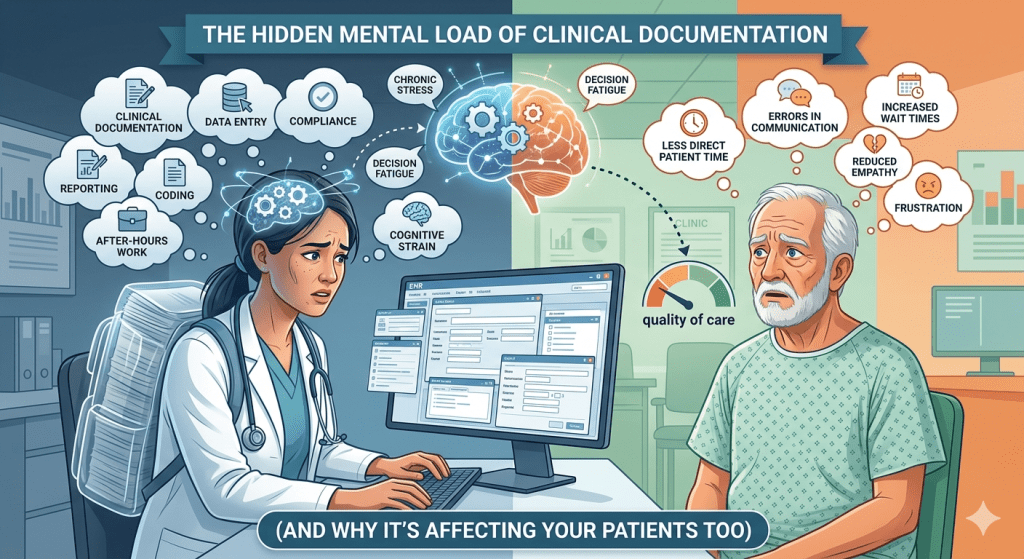
The Hidden Mental Load of Clinical Documentation (and Why It’s Affecting Your Patients Too) It’s not just charting. It’s cognitive residue. Most conversations around documentation focus on time: Hours spent in the EHR Nights lost to charting Administrative burden But what gets missed is something deeper: What documentation does to your brain while you’re still […]
HIPAA, AI, and Patient Transcripts: What Clinicians Must Know About De-Identification Before Using AI Tools
HIPAA, AI, and Patient Transcripts: What Clinicians Must Know About De-Identification Before Using AI Tools Artificial intelligence tools are rapidly entering healthcare workflows. Clinicians are experimenting with AI to summarize patient encounters, generate chart notes, and answer billing questions. While these tools can improve efficiency, there is an important compliance issue many providers overlook: Entering […]
Why PMHScribe Includes Both CPT-Style and Diagnosis-Based Medication Management Templates

These are two core documentation frameworks within PMHScribe, designed to support different clinical and billing environments, and serve as the foundation for our medication management templates. A lot of clinicians were taught to chart medication management visits by pairing each diagnosis with its own treatment line. In practice, that looked something like: That style still […]
HIPAA Social Media Violations in Mental Health: What Counts as PHI

Sharing clinical cases online can create HIPAA risk, even when names are removed. This guide explains what qualifies as Protected Health Information, the difference between Safe Harbor and Expert Determination, and why social media platforms are not HIPAA-secure environments. Learn how mental health providers can protect patient privacy and how secure AI documentation systems help minimize exposure.
Why PMHScribe Separates the Psychotherapy Add-On From the E/M Visit

Learn why PMHScribe separates psychotherapy add-on documentation from E/M notes to reduce audit risk, protect patient privacy, and improve legal defensibility in subpoenas and court cases.