
If you’re a psychiatrist, PMHNP, or therapist, you already know the reality:
Documentation doesn’t stop when your last patient leaves. For many mental health providers, charting extends hours beyond clinical time, cutting into evenings, weekends, and personal time. And while speed matters, cutting corners isn’t an option when compliance, audits, and patient care are on the line.
So how do you write psychiatry notes faster without risking quality or compliance? This guide breaks down exactly how.
Psychiatric documentation is uniquely complex. You’re not just capturing symptoms, you’re documenting:
That’s why even experienced clinicians spend hours charting after sessions. And the real issue isn’t just time, it’s cognitive load.
Slow charting impacts more than your schedule:
Time spent in EHR systems continues to be one of the leading contributors to clinician burnout, especially in behavioral health.
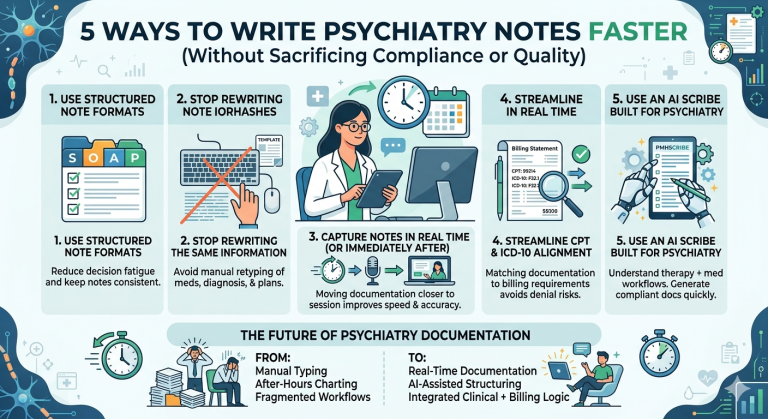
Standardized formats reduce decision fatigue and keep notes consistent.
They help you:
Many clinicians spend time retyping:
Templates help, but overusing copy-forward can introduce compliance risks. The goal is structured efficiency, not duplication.
Waiting hours to document increases:
Moving documentation closer to the session significantly improves speed and accuracy.
Matching documentation to billing requirements is a major time drain.
Manual coding:
Tools that align documentation with CPT logic can dramatically reduce both time and errors.
This is where the biggest shift is happening. Unlike generic tools, psychiatry-specific AI scribes:
Platforms like PMHScribe are designed specifically for behavioral health, producing structured notes aligned with real clinical workflows.
Faster doesn’t mean:
It means:
The shift is already underway:
From:
To:
AI scribes are quickly becoming standard in modern mental health practices. If you’re still spending hours on notes each day, the issue isn’t your discipline, it’s your system. The most efficient practices today are: