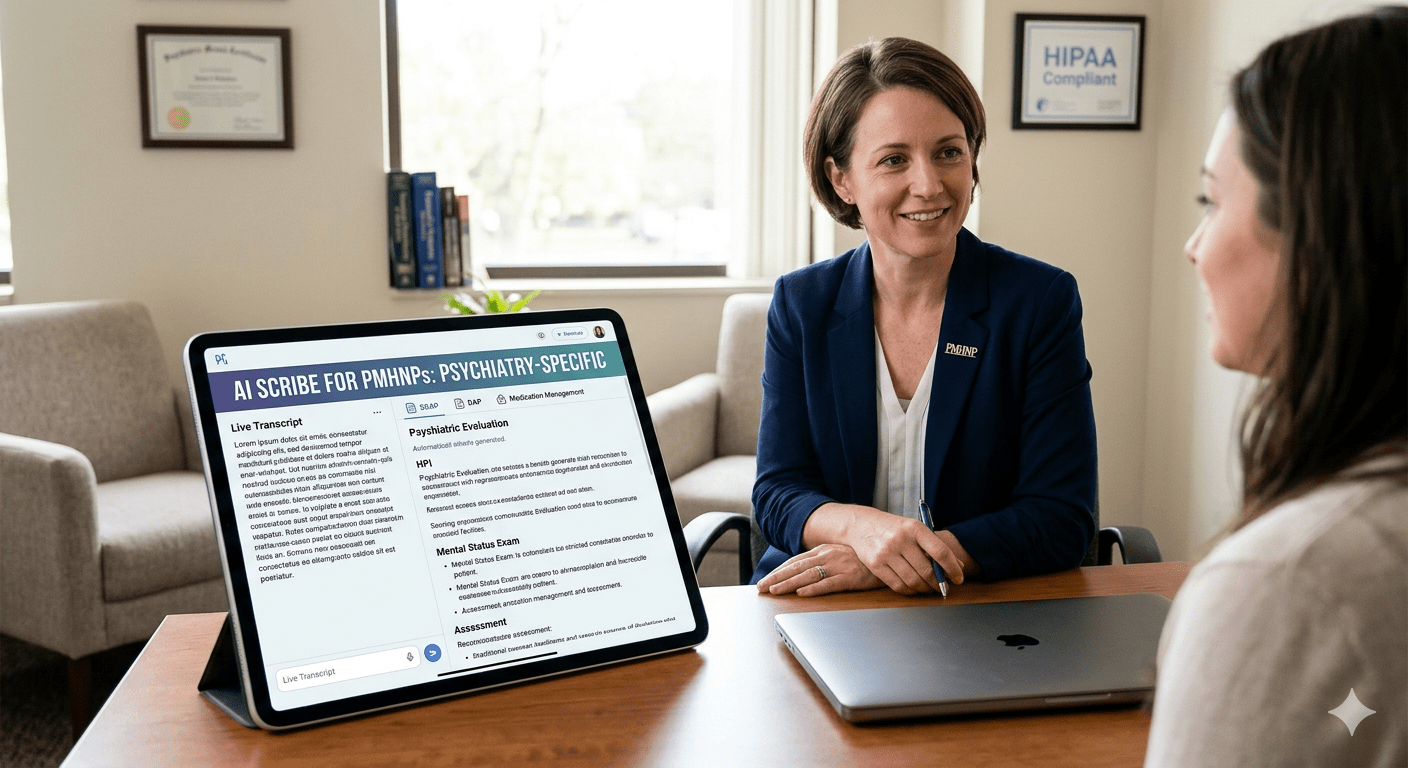

These are two core documentation frameworks within PMHScribe, designed to support different clinical and billing environments, and serve as the foundation for our medication management templates.
A lot of clinicians were taught to chart medication management visits by pairing each diagnosis with its own treatment line. In practice, that looked something like:
- Binge eating disorder: Increase lisdexamfetamine, continue therapy
- Insomnia related to mental health condition: Continue Trazodone
- Generalized anxiety disorder: Continue Fluoxetine
That style still exists for a reason. But it is not the same as saying it is the standard for every outpatient psychiatric note.
The reason PMHScribe supports both a traditional outpatient Medication Management notes and a Diagnosis-Based Medication Management note is that psychiatric documentation is still split between two different documentation worlds: encounter-based office psychiatry and treatment-plan-driven community behavioral health documentation. (Centers for Medicare & Medicaid Services)
Quick overview
The difference in how psychiatric medication management is documented often comes down to the difference between Current Procedural Terminology (CPT) and the Healthcare Common Procedure Coding System (HCPCS) in psychiatric documentation.
In outpatient insurance-based psychiatry, documentation usually follows Current Procedural Terminology (CPT) and Evaluation and Management (E/M) rules, which focus on the problems addressed during the visit and the medical decision making involved.
In Medicaid, Federally Qualified Health Center (FQHC), and Community Mental Health Center (CMHC) settings, documentation may still reflect Healthcare Common Procedure Coding System (HCPCS)-linked and treatment-plan-driven requirements, where diagnoses are more explicitly tied to interventions.
That distinction helps explain why some clinicians were trained to chart diagnosis-by-diagnosis, while others use a more streamlined encounter-based medication management note.
If you want it even smoother, change the first sentence to this:
Psychiatric medication management notes are not structured the same way in every setting, and much of that difference comes down to whether the documentation model is shaped more by Current Procedural Terminology (CPT) or the Healthcare Common Procedure Coding System (HCPCS).
Why diagnosis-based charting became common
That documentation approach reflects historical requirements in program-driven behavioral health settings.
The outpatient ICD-10-CM rules say to code all documented conditions that coexist at the time of the encounter and require or affect care, treatment, or management, but not conditions that were previously treated and no longer exist. That means the question is not “what diagnoses does the patient have in general,” but “which diagnoses mattered to this visit.” (CDC)
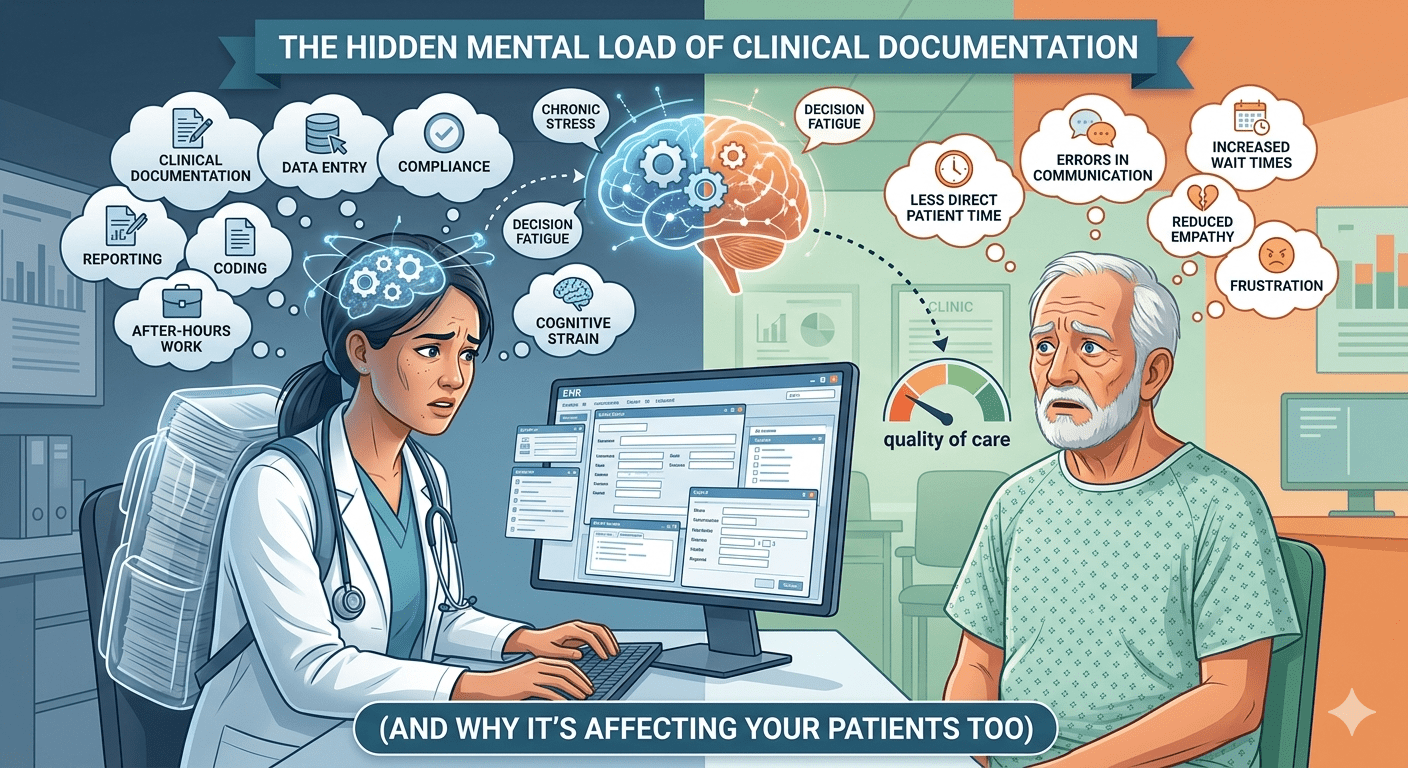
At the same time, a large literature on “note bloat” shows what happened when clinicians were pushed toward repetitive, overinclusive charting. A JAMA Network Open study of 2.7 million outpatient notes found median note length increased 60.1% from 2009 to 2018, median redundancy increased 10.9 percentage points, and by 2018 only 29.4% of note text was directly typed, with the rest templated or copied. The authors warn that longer and more repetitive notes can obscure clinically important information. (JAMA Network)
That is exactly the tension PMHScribe is solving. Some practices need a leaner, encounter-based note. Others still need a diagnosis-based note because their documentation model is built around plan linkage and audit visibility.
Practical example
Take this patient:
- Diagnoses: binge eating disorder, insomnia related to mental health condition, generalized anxiety disorder
- Chief complaint: binge eating disorder
The note might look like this:
History of present illness:
Patient reports binge eating symptoms still remain. No purging. With stress, feels they are binging more. Reports they have not had any sleep problems since adding lisdexamfetamine 50 mg and are still getting about 7 hours of sleep nightly.
Mental status exam:
In the MSE the Mood stable and euthymic. Speech linear and goal directed…
Treatment plan / recommendations:
- Continue Trazodone 50 mg at bedtime
- Continue Fluoxetine 20 mg daily
- Increase Lisdexamfetamine to 60 mg in the morning
- Psychotherapy provided regarding mindfulness and journaling
- Labs, referrals, and follow up frequency.
This note already documents more than just the chief complaint. The binge eating disorder is clearly addressed because symptoms are reviewed and the lisdexamfetamine dose is increased. The insomnia is also addressed because sleep is assessed, the patient reports no current sleep problems, and Trazodone is continued. The generalized anxiety disorder is also reflected in the encounter because mood is stable and euthymic and Fluoxetine is continued.
In a standard outpatient office psychiatry setting, that is often enough. The assessment is already in the history and mental status exam, and the management is already in the plan. There may be no need to restate the same content again as:
- Binge eating disorder: Increase Lisdexamfetamine to 60mg from 50mg. Continue with therapist weekly.
- Insomnia: Continue Trazodone
- Generalized anxiety disorder: Continue Fluoxetine and psychotherapy.
That second format is not inherently wrong. It is just more explicit and more repetitive. In many office-based CPT-style notes, it adds duplication more than value. That is consistent with modern E/M reform, which moved away from rewarding documentation volume and toward documenting the work actually performed. (Centers for Medicare & Medicaid Services)
When the diagnosis-based plan still makes sense
There are still environments where the diagnosis-based structure is useful, or even expected.
In Medicaid-heavy and community behavioral health settings, reviewers often expect to see a clearer link between diagnosis and intervention. In those systems, the note may need to prove not just what happened in the encounter, but how the service matches an active treatment plan. That is the logic behind the older style. This format is more rigid, but it is easy for auditors and program reviewers to follow. It preserves the connection between diagnosis and service in a way that some payers and programs still prefer.
Why PMHScribe includes both
PMHScribe includes a traditional medication management visit because many outpatient psychiatric practices need a note structured around the actual visit:
Chief complaint, history of present illness, mental status exam, past/family/social history, medical review of systems, impression, and treatment plan.
That format fits modern office psychiatry because it documents the problems addressed, the clinical assessment, and the treatment decisions without unnecessary repetition. CMS’s current E/M materials emphasize medically appropriate history and exam, with visit selection based on medical decision making or time rather than note volume. (Centers for Medicare & Medicaid Services)
PMHScribe also includes a diagnosis-based medication management format (dx-based) because many Medicaid, FQHC, and CMHC workflows still need more explicit diagnosis-to-plan linkage. FQHC payment rules, for example, operate through a different billing structure than a routine office CPT claim, and that different structure often shapes how organizations build their templates and compliance expectations. (Centers for Medicare & Medicaid Services)
Bottom line
The question is not which format is “right” in the abstract. The real question is: what documentation model fits the care setting and payer environment?
In ordinary outpatient office psychiatry, the clinician usually does not need to restate every stable diagnosis as a separate bullet if the note already shows assessment and management of those conditions. The ICD-10-CM outpatient guidelines support reporting the conditions that coexist and affect care at that visit, and modern E/M policy supports focusing on the problems actually addressed. (CDC)
In Medicaid, FQHC, and CMHC settings, a diagnosis-based structure may still be appropriate because the documentation is serving a more explicit treatment-plan and audit function.
That is why PMHScribe supports both note styles: one for encounter-based outpatient psychiatry, and one for diagnosis-based program-driven documentation.