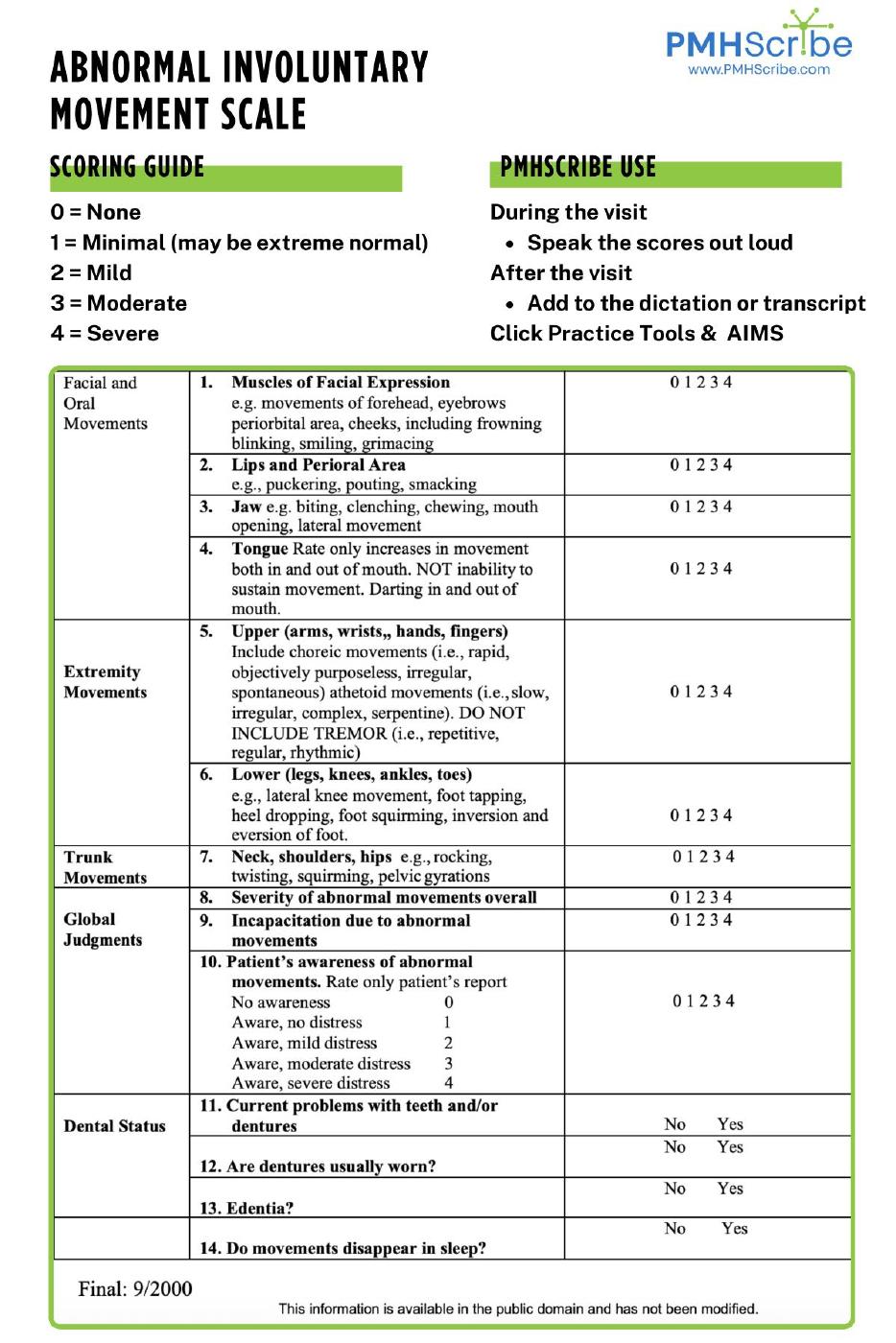

Psychiatrists, Psychiatric Nurse Practitioners, and Physician Assistants document more than symptoms. They record patient histories, side effects, treatment plans, and safety assessments. One essential tool in this process is the Abnormal Involuntary Movement Scale (AIMS), used to monitor for movement disorders related to antipsychotic medications.
Traditionally, AIMS documentation has been handled with separate forms—often printed, written on, and scanned back into the chart. This workflow interrupts the session, adds administrative tasks, and makes results harder to track across visits. PMHScribe was designed to solve this by embedding the AIMS chart directly into the psychiatric note.
In many practices, the AIMS workflow looks like this:
This workflow creates several issues:
The tool itself is sound. The problem lies in the workflow surrounding it.
The Abnormal Involuntary Movement Scale is a 12-item clinician-administered rating system. It evaluates:
Each area is scored from 0 (none) to 4 (severe). The total provides a structured approach to assessing movement disorders, such as tardive dyskinesia.
Best practices recommend using the AIMS chart:
Routine AIMS assessments allow providers to detect side effects early and adjust care accordingly.
The difference between scanning a form and documenting AIMS inside the chart is significant. Integration ensures:
PMHScribe incorporates the AIMS chart directly into its psychiatric note template. This means:
By keeping AIMS within the same workflow as the rest of psychiatric documentation, PMHScribe makes it easier to deliver safe and consistent care.
Why is the AIMS scale necessary?
It helps clinicians detect abnormal movements early, particularly tardive dyskinesia, which can become permanent if not addressed.
How often should AIMS be performed?
Most guidelines recommend every 3–6 months for patients on antipsychotics, or more often if symptoms appear.
What makes integrated AIMS better than paper forms?
Integration eliminates extra steps, keeps results searchable, and allows providers to track changes over time.
Does PMHScribe replace clinical judgment?
No. AIMS is still clinician-scored. PMHScribe ensures results are captured efficiently and consistently.
The AIMS scale is central to safe antipsychotic prescribing. But when it exists outside of the chart, it creates inefficiency and risk. PMHScribe solves this by embedding the AIMS chart directly into psychiatric documentation—making assessments easier to complete, results easier to track, and care safer for patients.
Click to Download an AIMS assessment: